AT&T, Verizon considered dropping employee health insurance as a result of healthcare overhaul
Thursday, May 6th, 2010 -- 9:21 am
Democrats canceled hearings after learning companies' plans would make health insurance bill look bad
House Democrats abruptly canceled hearings into major US companies' responses to their massive health care overhaul after receiving documents revealing that companies were considering dropping all of their employees' health benefits in response to the healthcare bill.
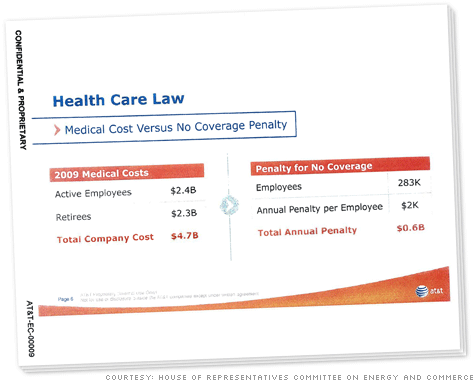
Documents obtained by Fortune and published on CNN show that AT&T and other major companies -- including Verizon, Deere and Caterpillar -- considered eliminating their employee benefits program and simply paying a fine to the government for those they employed without insurance. The fine for AT&T would have amounted to $2,000 per employee, costing the company a grand total of $600 million a year. Maintaining benefits, meanwhile, will cost the firm some $4.6 billion.
Democrats apparently canceled hearings into the companies practices when they received the documents and learned that such hearings might expose a major flaw in their health insurance overhaul: namely that companies might pay a fine rather than provide benefits for employees because the fine would be dramatically cheaper. They've had the documents for roughly a month, Fortune magazine said.
Democrats requested documents from the four companies after they announced they were taking massive write-downs to earnings as a result of costs incurred by the bill. Liberals said the huge firms were overstating costs as a result of the bill, presumably to make it look bad.
After receiving documents from the companies, however, Democrats issued a brief memo the write-downs were "proper and in accordance with SEC rules."
The memo didn't mention they'd received proof that their bill might result in the loss of coverage for millions of Americans.
Verizon commissioned a study examining the effects of various healthcare bills under consideration on their bottom line. The study, prepared by a consulting firm, asserted, "Even though the proposed assessments [on companies that do not provide health care] are material, they are modest when compared to the average cost of health care."
To avoid added costs, the study said, "employers may consider exiting the health care market and send employees to the Exchanges."
Caterpillar and AT&T examined what they believed would be an increase in insurance costs as major drug manufacturers, insurers and medical device makers shifted costs from new taxes they were going to pay onto health insurance clients.
"Caterpillar and AT&T actually spell out the cost differences: Caterpillar did its estimate in November, when the most likely legislation would have imposed an 8% payroll tax on companies that do not provide coverage," CNN's Shawn Tully wrote late Wednesday. "Even with that immense penalty, Caterpillar stated that it could shave $25 million a year, or almost 10% from its bill. Now, because the $2,000 is far lower than 8%, it could reduce its bill by over 70%, by Fortune's estimate."
On the flip side, health insurance companies have argued the penalties for not carrying insurance are too small. They posit that some Americans will decide to pay a fine rather than carry insurance because the fine is cheaper, and they figure they can buy insurance when they get sick (since insurers will be banned from denying coverage based on pre-existing conditions).
None of the companies have confirmed they are actively considering dropping benefits for employees. Many businesses see health and other benefits as important factors in helping them hire and retain talented workers.
But the costs to the US government if they did would be enormous -- another reason why Democrats may have canceled hearings on the matter.
"By Fortune's reckoning, each person who's dropped would cost the government an average of around $2,100 after deducting the extra taxes collected on their additional pay," Tully wrote. "So if 50% of people covered by company plans get dumped, federal health care costs will rise by $160 billion a year in 2016, in addition to the $93 billion in subsidies already forecast by the" Congressional Budget Office.
http://rawstory.com/rs/2010/0506/att-verizon-considered-dropping-health-insurance-employees/

